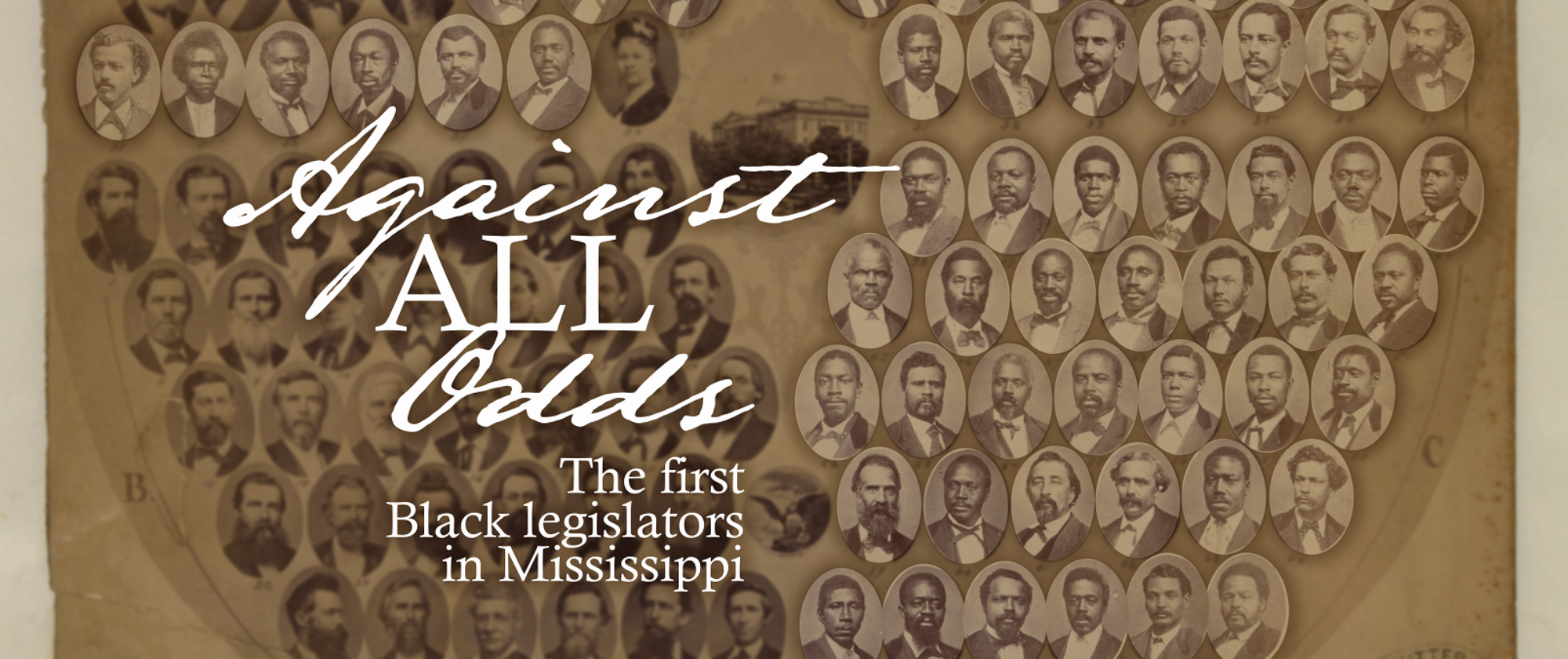
Merriman Howard (Jefferson County)
State House: 1870-1872
Born: March 8, 1821
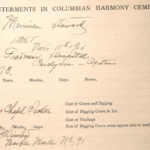
Died: November 11, 1904 in Washington, D. C.
Name also commonly spelled “Merrimon.” Birthplace uncertain because it differs on census records and burial records. Birth year also varies on records.
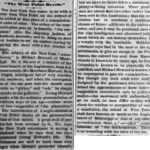
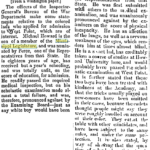
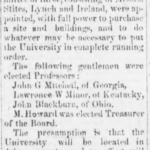
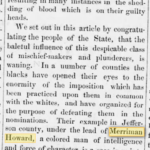
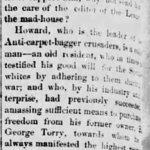
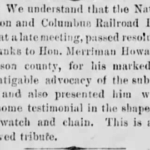
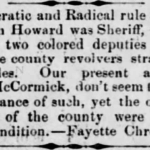
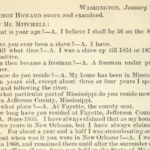
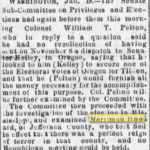
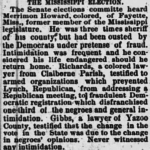
Howard served as sheriff and justice of the peace in Jefferson County. His son, Michael, was sent to West Point in 1870 as one of the first Black cadets, but he did not pass the entrance exam. In January of 1877, Howard testified about the denial of election franchise in Mississippi.
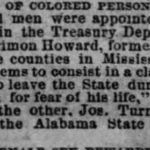
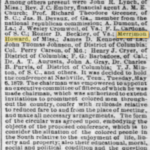
Fearing for his safety, Howard relocated to Washington, D.C., and was appointed to be a messenger in the Treasury Department in 1877. He lost his position in 1886 after a Mississippi politician, Rep. Barksdale, requested his removal. Howard and wife Elvira are listed on the 1880 and 1900 census, as well as city directories, in Washington, D. C. He died there in 1904, followed by Elvira in 1907; both are recorded in the “District of Columbia Deaths, 1874-1961” database. Howard’s descendants through his son, Michael, are well documented in later records, especially in Jefferson County and in Chicago.
Click here to read extensive passages about Merriman Howard, his mother, and his son from the WPA history of Jefferson County.
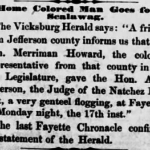
“[Merriman] Howard was a former slave who was freed in the 1850s; he was a carriage driver and helped to found the first black school in the county; he also held many offices, including sheriff. But in 1876, shorn of office, Howard nonetheless directly confronted the white liners in a massive procession in Fayette, thereby provoking the ire of leading Democrats. They threatened to kill him, even though he had recently been appointed a special federal marshal. Consequently, Howard fled the county prior to the election. The U.S. marshal for the Southern District of Mississippi, in a report to the U.S. attorney general, described Howard’s plight this way: ‘Howard is a colored man, a staunch Republican, and a leader among his people. Herein is his offending.'”
(Justin Behrend, Reconstructing Democracy: Grassroots Black Politics in the Deep South after the Civil War, 2015)
“Of all the members of that legislature, there were only two I had ever known before, one who had been a slave, Merriman Howard from Jefferson county, who had been the house servant and carriage driver for my nearest neighbor, in the days when I lived in that county, Mr. Wade Harrison…”
(Frank A. Montgomery, Reminiscences of a Mississippian in Peace and War, 1901)

Links:
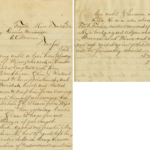
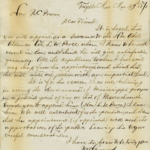
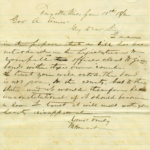
Letter from Merriman Howard to the Assistant Commissioner of the Mississippi Freedmen’s Bureau
Washington Post: The First Black at West Point
Memorial on Find A Grave




This page was last updated on December 1, 2025.